Bryce Canyon vs Mount Roraima: hiking weather in June
Bryce Canyon and Mount Roraima share a warm June mean, but humidity and wet-day frequency tell different stories.
6 min read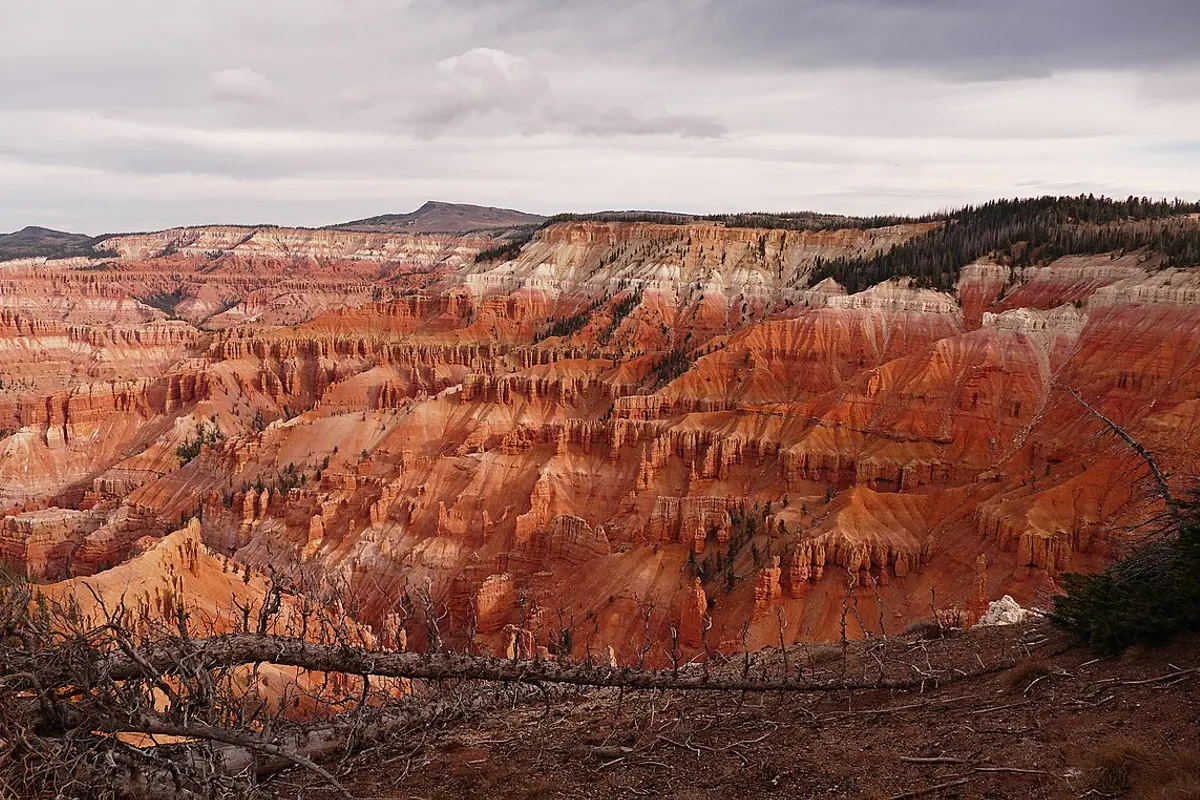
| Destination | Mean | Relative humidity | Wet days | Score | Outcome |
|---|---|---|---|---|---|
| Bryce Canyon | 20.8 °C | 20.0% | 11.05% | 90 | Eligible |
| Mount Roraima | 20.9 °C | 80.4% | 95.81% | 75 | Eligible |
“Temperature answers one question. Air and rain decide what kind of June it is.”
- TemperatureNearly identicalThe hiking-hour means differ by only 0.1 °C.
- Humidity60.4 points apartContext for the sampled air, not a comfort index.
- Wet days84.76 points apartFrequency above the one-millimetre full-day threshold.
Why similar warmth does not produce the same reading
Bryce Canyon and Mount Roraima are a useful pair because their June hiking-hour means differ by only 0.1 °C. If the mean were the whole story, their records would look interchangeable. Relative humidity differs by 60.4 percentage points, while the wet-day share differs by 84.76 points. Bryce's record is warm and comparatively dry at the selected cell; Roraima's is warm and persistently wet. The public score reflects that broader pattern, but neither score is a promise about how every person will feel or how every route will drain after rain.
Bryce Canyon: warm, dry air at the selected cell
Bryce Canyon's June record combines a 20.8 °C hiking-hour mean with 20.0 percent relative humidity and an 11.05 percent wet-day share. That is a dry-looking climate fingerprint, but it does not describe shade, water availability or sun exposure on a particular trail. The useful reading is that historical rain frequency was low and the sampled air was dry. A current heat forecast, water plan and official route notice still determine what a specific day requires.
Mount Roraima: similar warmth inside a wet pattern
Mount Roraima's 20.9 °C mean sits beside 80.4 percent relative humidity and wet days on 95.81 percent of valid historical June days. A wet day crosses one millimetre over the complete local day; the statistic does not reveal whether rain fell briefly or for hours, nor what it did to a chosen path. It nevertheless changes the planning context completely. Rain protection, traction, visibility and local access information become central questions even though the headline temperature looks almost identical to Bryce Canyon.
Both months remain eligible because precipitation is scored but is not a critical withholding component in the published gate. That detail matters. Eligibility means the record clears the site's critical rules; it does not mean that a humid, wet month is equivalent to a dry one. The useful conclusion is comparative: choose Bryce if a drier air profile matters, or investigate Roraima with a specific tolerance for wet ground, cloud and changing access conditions. The climate page can make that trade-off visible without pretending to select the route for you.
The difference also changes what a traveller should look for outside the climate page. In a dry June, current heat, sun exposure and water planning may deserve first attention. In a wet June, drainage, cloud, visibility, traction and the status of bridges or unpaved approaches may matter more. These are planning prompts, not predictions about either destination. They show how a small table of climate variables can lead to better questions when the reader does not mistake it for a complete route guide.
It is tempting to treat the lower score as a verdict. A better reading is that the two months fit different preferences. Bryce's 90 is supported by a much drier historical profile; Roraima's 75 still clears the critical gate but carries a very different precipitation context. If the trip has a fixed date, compare the current forecast and local notices rather than trying to optimise the historical score. If the date is flexible, use the annual profiles to decide which climate trade-off you would actually enjoy.