Dry hiking weather: why low rain can still mean high heat
Three very dry July climates show why rainfall alone can point hikers toward the wrong month, and why heat probability belongs in the decision.
7 min read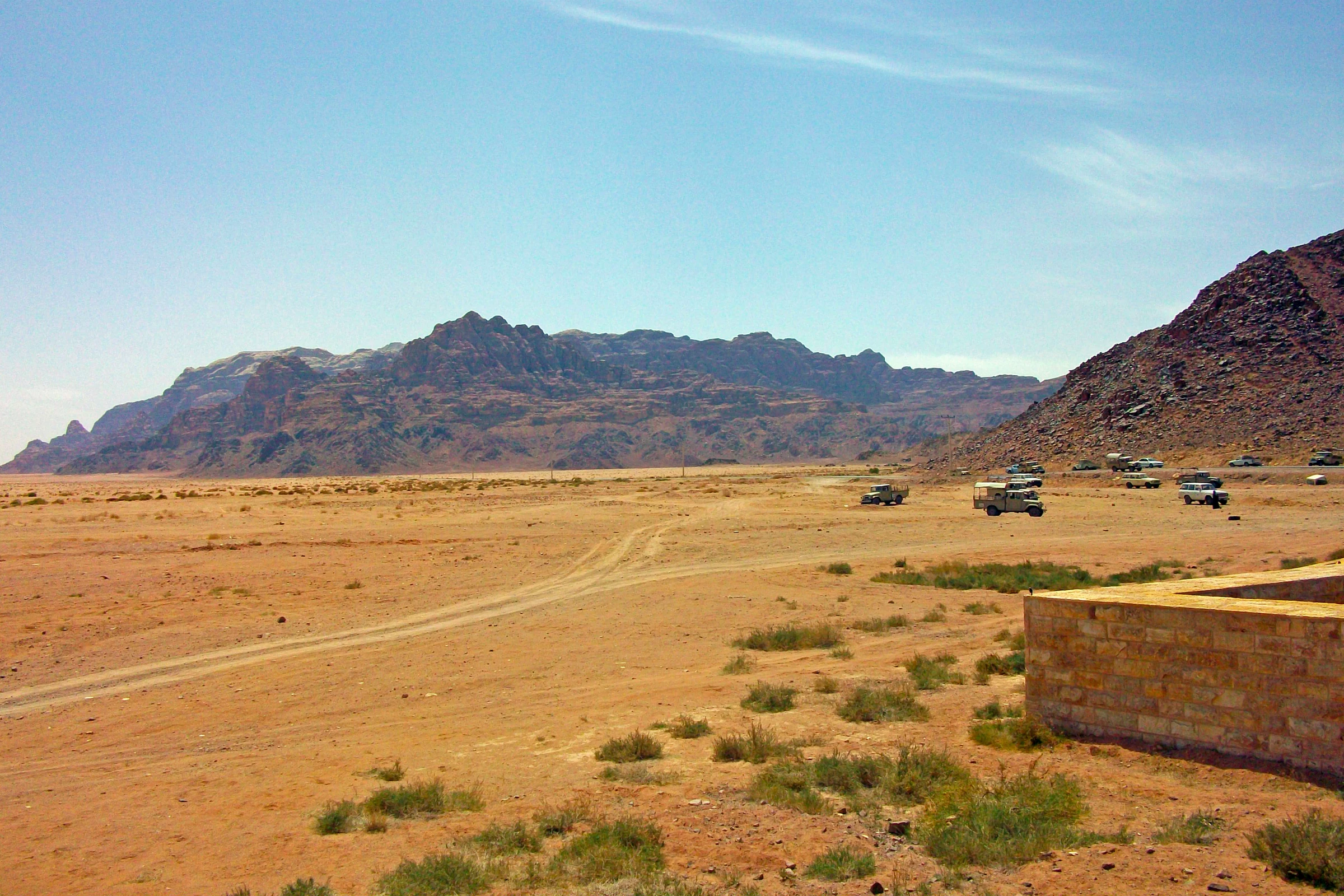
A forecast with no rain symbol looks inviting. A climate table with almost no wet days looks even more convincing, because it seems to describe an entire month rather than one afternoon. Yet dryness answers only one planning question: how often measurable precipitation occurred historically at the selected model point. It does not tell us whether the hours in which people usually hike were comfortable, whether very hot days dominated the month, or whether a route has shade and water. Wadi Rum, Arches and Mallorca make that gap unusually clear. Their July records are dry, but the same records also contain a strong heat signal that changes the hiking decision.
“A dry month can remove one problem while intensifying another.”
The July contradiction
At Wadi Rum, the historical wet-day share for July is 0.0 percent. That figure is not a typo. At the selected representative ERA5-Land cell, the mean temperature during sampled hiking hours is 30.1 °C, while the historical probability of a hot day is 99.72 percent. Arches is similarly difficult: 8.39 percent wet days, a 30.8 °C hiking-hour mean and a 97.42 percent hot-day probability. Mallorca is less extreme, but its 5.81 percent wet-day share sits beside a 27.7 °C mean and a 79.91 percent hot-day probability. The current recommendation gate withholds all three July months. Low rain is therefore true, but incomplete.
| Destination | Wet days | Hiking-hour mean | Hot-day probability | Recommendation |
|---|---|---|---|---|
| Wadi Rum, July | 0.0% | 30.1 °C | 99.72% | Withheld |
| Arches, July | 8.39% | 30.8 °C | 97.42% | Withheld |
| Mallorca, July | 5.81% | 27.7 °C | 79.91% | Withheld |
The table is not saying that nobody can walk in these places in July. It says something narrower and more useful: the historical climate at one representative cell fails the site's recommendation rules, so BestTimeToHike does not present the month as a generally suitable choice. An early, short and shaded outing may differ from an exposed full-day route. Fitness, acclimatisation, water availability and local restrictions also matter. Those details are outside the climate model, which is precisely why a low precipitation number should not be turned into a blanket endorsement.
What the heat gate is protecting against
BestTimeToHike separates the hiking-hour temperature mean from hot-day probability. The mean summarises the sampled daytime window; hot-day probability counts how often the daily heat condition crosses the method's threshold. Averages can conceal frequency. A month may have a tolerable-looking mean while still containing many days that exceed the heat limit, and a desert night does not make the midday hiking window cool. The gate is deliberately conservative: when a critical component crosses its exclusion rule, the month cannot become a recommendation merely because precipitation, snow or daylight look favourable. This prevents a strong result in one component from cancelling a serious weakness in another.
Wadi Rum also demonstrates a better way to use the data: compare months inside one destination before comparing destinations. March has a 17.4 °C hiking-hour mean and 5.05 percent wet days; November has 18.3 °C and 2.22 percent. Both remain dry by most travellers' standards, yet their temperature context is very different from July. This does not make March or November guaranteed trip dates. It makes them more coherent starting points for checking current forecasts, daylight, local guidance and the exact route. The useful decision is not dry versus wet, but dry enough and thermally plausible for the activity being planned.
A practical three-question reading order
Start with the critical gates: is the month excluded for heat, snow, rainfall or another published limit? Next, read the physical metrics instead of only the overall score. For a hot, dry destination, hiking-hour temperature and hot-day probability deserve attention before rainfall. Finally, move from climate to trip reality. Check a current mountain or desert forecast, official access information, water and shade on the chosen route, and the timing needed to avoid the hottest hours. This order preserves what historical data does well, seasonal comparison, without asking it to decide conditions on a particular trail or date. It also explains why BestTimeToHike can label a month low-rain while refusing to recommend it.